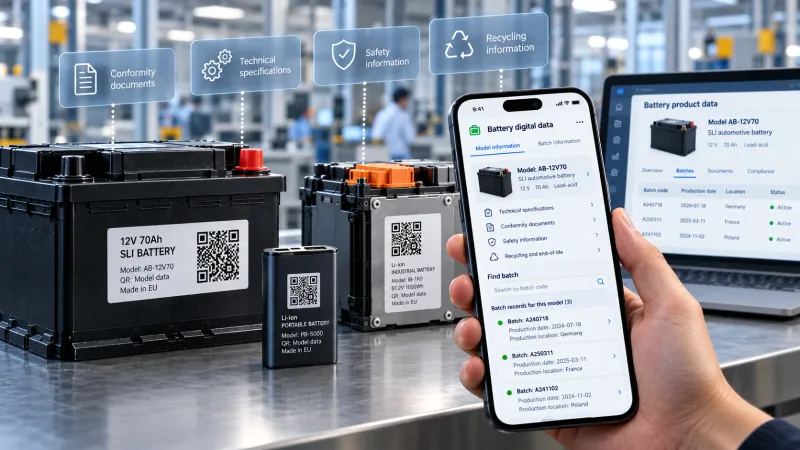

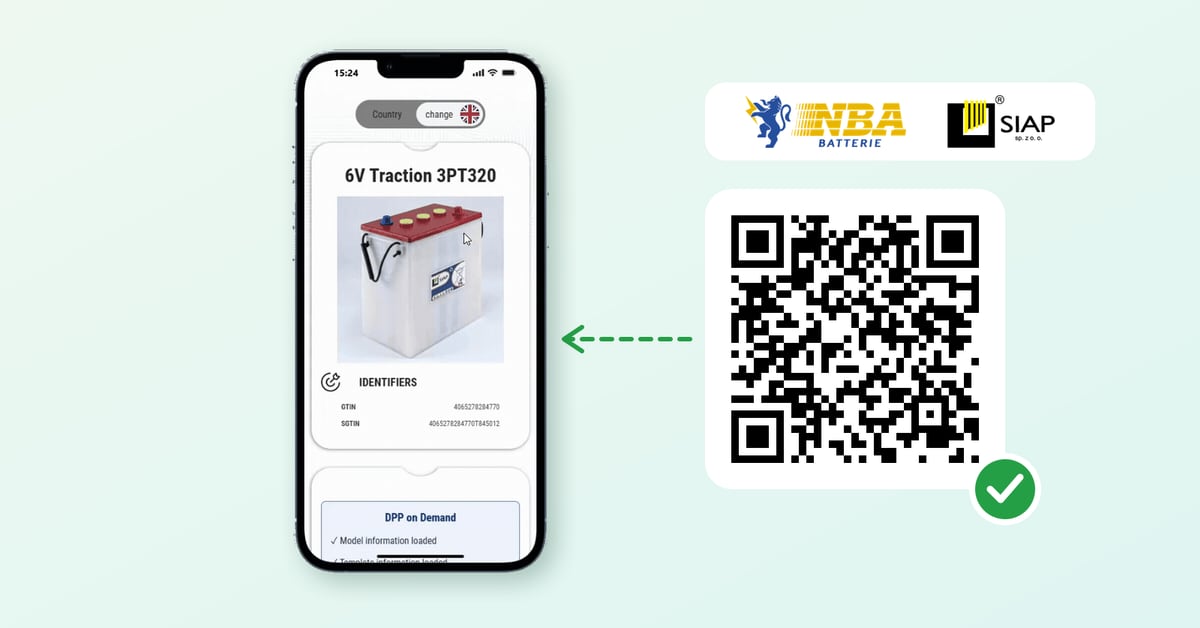
One QR code. One scan. A digital battery record connected to production.
For battery manufacturers preparing for the EU Battery Regulation, one of the biggest challenges is not simply creating a Digital Product Passport (DPP). It is connecting each physical battery to the right digital information, at the right point in the manufacturing process.
How can manufacturers achieve this without installing new QR code printers at every production station, duplicating data entry or introducing unnecessary complexity?


Together with NBA Batterie (Nuova Brescia Accumulatori S.r.l.) and SIAP Sp. z o.o., GoodsTag has demonstrated a practical working process using a real battery product.
The approach combines pre-printed, serialized QR code labels, simple production-line activation and configurable digital record management.
Once activated, a battery record can follow one of two paths: automated authentication, independent backup and publication with EU DPP Registry registration, or retention as a draft for subsequent validation and release.
The demonstration illustrates how battery manufacturers can progressively introduce Digital Product Passports while building on existing manufacturing processes and information systems.
The Challenge: Connecting Physical Batteries with Digital Information
Battery manufacturers already hold much of the information needed for a Digital Product Passport.
Technical specifications, product characteristics, material information and compliance documentation are typically managed at product-model level.
However, certain information becomes available only during manufacturing, including production dates, manufacturing orders, batch references and individual serial numbers.
This creates a practical challenge: how do you prepare QR code labels before all the relevant production information is known?
One approach is to print a unique QR code for each battery directly on the production line. But this can require additional printing equipment, integration work and changes to established processes.
What if manufacturers could print all their QR labels in advance, apply them during production and activate the digital record only when the relevant manufacturing information becomes available?
That is the approach illustrated by the NBA Batterie, SIAP and GoodsTag demonstration.
The Solution: Three Steps from Pre-Printed QR Code to Activated Battery Record
- 1Pre-printSerialized QR labels prepared in advance
- 2Scan & activateProduction data linked to the battery
- 3ValidateWorkflow chosen per battery model
Step 1 — PRE-PRINT: Prepare Unique QR Code Labels in Advance
Each battery receives a pre-printed QR code containing a unique, persistent identifier.
In the NBA Batterie and SIAP demonstration, the identifier uses a GS1 Digital Link structure combining a GTIN with an individual serial number.
The labels can be prepared before the battery's manufacturing date, production order or batch is known.
The QR code identifies the physical battery. The information associated with that identifier is connected later.
The practical advantage: Manufacturers can prepare serialized labels in advance, without needing a dedicated variable-data QR code printer at each production station.
Step 2 — SCAN & ACTIVATE: Connect the Battery to Production Data
When the battery reaches the relevant production stage, its QR code is scanned.
Depending on the manufacturer's production environment, this can be performed by an operator using a smartphone or handheld scanner, or automatically through an industrial camera or QR code reader.
The scan identifies the battery and initiates an authenticated activation process.
The operator or connected production system associates the unique identifier with the relevant production information, such as the manufacturing date and location, production order, batch reference and serial number.
GoodsTag then connects this information with the existing product-level data and documentation to create or update the corresponding digital record.
The practical advantage: A simple scan and confirmation can connect a physical battery to its digital production data, without requiring operators to recreate information already available in manufacturing systems.
Step 3 — VALIDATE & PROCESS: Publish Automatically or Keep as Draft
Once activated, the battery record can follow different workflows depending on the battery model, applicable regulatory obligations, data completeness and the manufacturer's own business rules.
Importantly, activating a battery's digital identity does not necessarily mean publishing its passport immediately.
The manufacturer retains control over how and when the digital record becomes an officially published passport.
Option A — Automated Authentication, Backup and Publication
When all required information is available and the manufacturer's predefined conditions are satisfied, GoodsTag can orchestrate an automated workflow covering:
1. Authentication and data integrity
The digital record undergoes the configured authentication and cryptographic integrity process, helping establish the authenticity of its origin, protect its integrity and maintain a verifiable history of changes.
2. Independent third-party backup
The required DPP information is transferred to an independent third-party backup provider to support long-term availability and continuity, including in the event that the original hosting service becomes unavailable.
3. Digital Passport publication
The validated record is published and made accessible through the battery's existing QR code.
Different audiences can access the relevant information according to their permissions and applicable regulatory requirements.
4. EU DPP Registry registration
For batteries requiring an individual passport under Article 77, the workflow can proceed with registration of the required identifiers, passport references and metadata in the EU Digital Product Passport Registry, in accordance with its technical and regulatory requirements.
The Registry acts as a central index for passport identification and verification, while the complete digital information remains hosted in the decentralized DPP infrastructure.
The practical advantage: Manufacturers can establish a controlled, automated process from production activation through to publication, independent backup and EU registration.
Option B — Keep the Digital Record as a Draft
Alternatively, the manufacturer can choose to retain the activated record as a draft.
This may be appropriate when certain information or supporting documents are missing, internal quality or compliance approval is still required, or publication must follow a separate product-release process.
The digital record remains linked to the battery's original identifier and can be completed, reviewed and published later.
No replacement QR code is required.
The practical advantage: Manufacturers can separate production identification from final publication, while maintaining traceability and control throughout the process.
A draft is an intermediate production state. For batteries subject to mandatory passport requirements, the passport must be available and the required registration completed before the battery is placed on the EU market or put into service.
These two publication paths are configurable workflows illustrated by the working-process demonstration; they are not presented as evidence of a completed industrial deployment at NBA Batterie or SIAP.
Explore the Real Battery DPP Demonstration
A Real Battery. A Real QR Code. A Working Digital Experience.
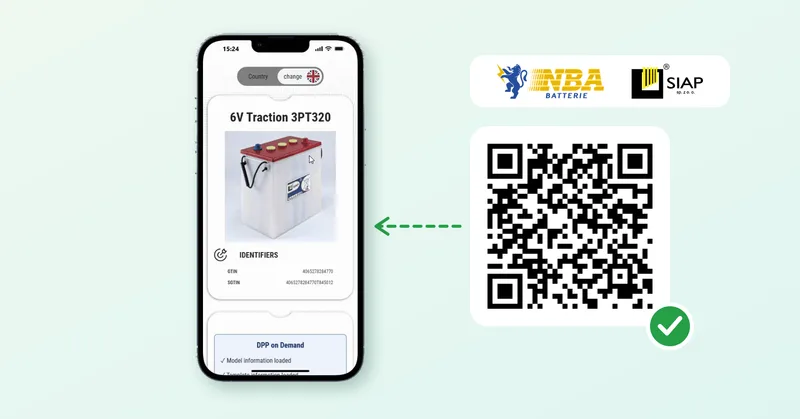
The demonstration features a commercially produced SIAP 6V Traction 3PT320 battery.
Its serialized GS1 Digital Link QR code connects the physical product to a GoodsTag digital battery record.
Visitors can explore the example directly on a smartphone, including battery identification, technical product information and supporting digital documentation.
This is not a fictional product or a static mock-up. It uses a real battery and demonstrates how physical product identification can connect to an operational digital information experience.
The production activation and configurable publication workflows are demonstrated as a working process. They should not be interpreted as proof that every automation step, external backup connection or EU Registry submission has already been deployed in the partners' production facilities.
One Approach for Different Battery Categories and Regulatory Requirements
The EU Batteries Regulation (EU) 2023/1542 introduces QR code obligations from 18 February 2027, but not every battery requires the same level of digital information.
Industrial Batteries Above 2 kWh: Individual Battery Passport
Under Article 77, industrial batteries with a capacity greater than 2 kWh must have an individual Digital Battery Passport. The same obligation applies to electric vehicle batteries and light means of transport batteries.
The passport includes both battery-model information and information specific to the individual battery, with different access rights depending on the type of information.
With GoodsTag, common product-model data can be reused across batteries, while individual production information is associated with the unique serial identifier of each unit.
This reduces unnecessary data duplication while maintaining individual battery traceability.
Industrial Batteries of 2 kWh or Below: QR Code with a Lighter Information Set
Industrial batteries with a capacity of 2 kWh or below are also subject to the QR code requirements under Article 13, even though they do not require an individual battery passport under Article 77.
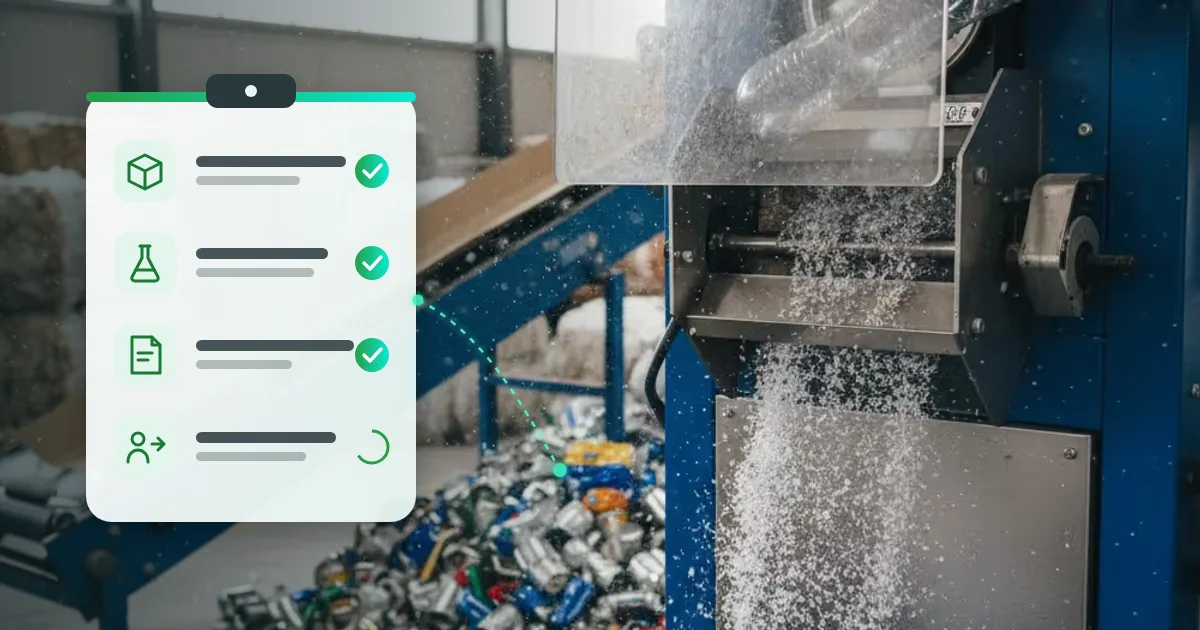
Their QR code must provide access to the applicable regulatory information, including relevant product and manufacturing details, conformity documentation and waste management information.
The information requirements are therefore lighter, but digital identification and access to the required information remain necessary.
The same pre-printed QR code and activation approach can support these batteries without imposing the full individual passport workflow where it is not required.
One identification and activation approach can serve different battery categories, with the appropriate digital information, validation and publication rules applied according to each model.
Designed to Scale: From Manual Scanning to ERP and MES Integration
The production approach demonstrated with NBA Batterie and SIAP can be adapted to different manufacturing environments.
Manual operator activation
An operator scans a battery QR code using a smartphone or handheld device and confirms the relevant manufacturing information.
This can be a practical starting point for manufacturers seeking to introduce Digital Product Passports with limited production-line changes.
Automated industrial scanning
Industrial cameras or fixed QR readers identify batteries as they move through production.
Their identifiers can be linked to the active manufacturing order, batch or production context, reducing manual interaction.
ERP and MES integration
For more automated production environments, GoodsTag can connect with existing Enterprise Resource Planning (ERP) and Manufacturing Execution Systems (MES) through APIs or structured data exchanges.
This allows production information already available in enterprise systems to be reused for digital record activation and management.
These approaches can be introduced progressively or combined.
A manufacturer can begin with a scan-and-confirm process and move toward greater automation as operational needs evolve.
What This Demonstration Means for Battery Manufacturers
The NBA Batterie, SIAP and GoodsTag use case highlights a practical way to bridge the gap between physical production and digital regulatory requirements.
- Less complexity on the production line. Pre-printed, serialized QR code labels reduce dependence on printing variable QR codes directly during manufacturing.
- Simpler digital activation. A controlled scan or automated identification event connects the physical battery to its production record.
- Flexible validation and publication. Manufacturers can choose between automated processing and draft-based approval workflows according to battery category and internal criteria.
- Stronger information integrity and continuity. Configurable cryptographic controls, traceable updates and independent third-party backup support the long-term management of battery information.
- Scalable automation. The same identification approach supports manual activation, industrial scanning and enterprise-system integration.
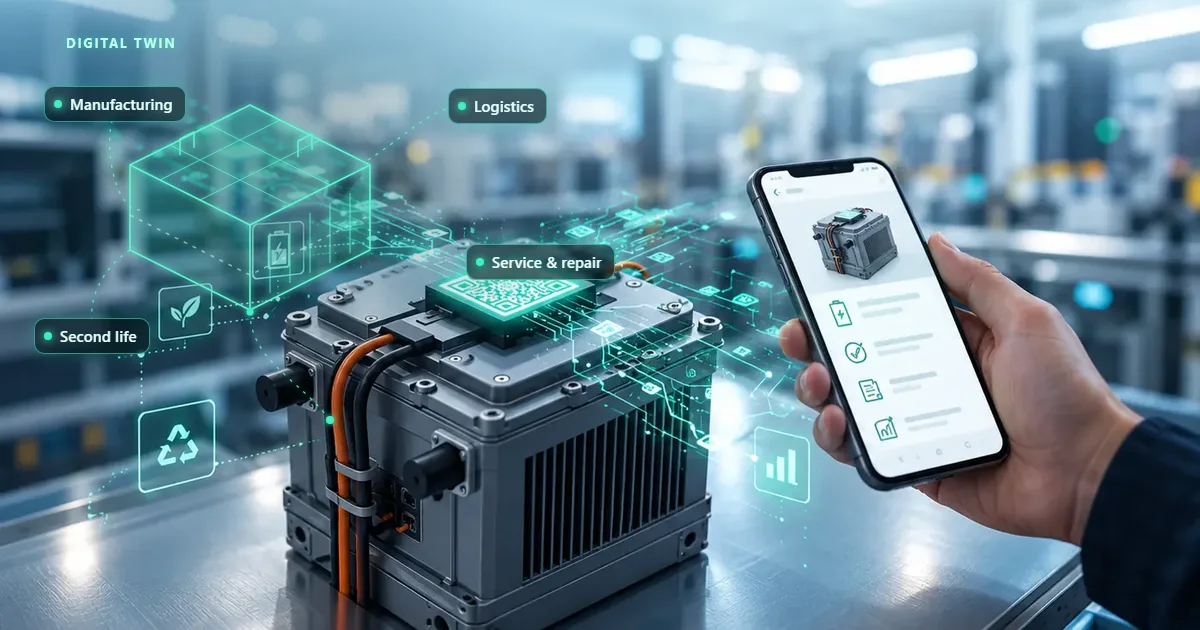
- One persistent digital identity. The physical QR code remains unchanged while the information behind it is maintained and updated throughout the battery's lifecycle.
The demonstration does not establish that pre-printing is the optimal solution for every factory. Label costs, inventory control, scanning reliability and integration requirements must still be assessed for each production environment.
However, it shows that manufacturers have practical alternatives to redesigning their production lines around on-demand QR code printing.
Bringing Battery Digital Product Passports into Manufacturing Reality
Presented at ECR iN Motion 2026, the collaboration between NBA Batterie, SIAP and GoodsTag made the concept of battery Digital Product Passports tangible.
Visitors could see a real battery, scan its QR code and explore the digital information connected to it.
Behind this experience lies a broader opportunity: using the same digital identity to connect manufacturing operations, product traceability, regulatory information and lifecycle data.
For battery manufacturers, the key lesson is that Digital Product Passport implementation does not have to begin with a major transformation of the production environment.
It can begin with an existing product, a unique QR code and a straightforward activation process.
Print the QR code first. Connect production data when it becomes available. Publish the right digital information when the record is ready.
Ready to Connect Your Batteries to Digital Product Passports?
Whether you manufacture hundreds or millions of batteries, GoodsTag can help you define an identification, activation and publication strategy suited to your production environment.
Start with the information and systems you already have. Choose the level of automation that makes sense for your operations. Apply the appropriate compliance workflows for each battery category.
Related Resources
- How to Use Pre-Printed QR Code Labels for Batch- or Item-Based Digital Product Passports
- A Real Battery DPP: GoodsTag, SIAP and NBA Batterie at ECR iN Motion
Regulatory References
- Regulation (EU) 2023/1542 — Articles 13 and 77
- Commission Implementing Regulation (EU) 2026/1778 — EU DPP Registry
This article describes a demonstrated working process and possible implementation configurations. Specific deployment and compliance arrangements depend on the manufacturer's requirements and the applicable regulatory framework.