


Your End-to-End Battery DPP Solution, Powered by GoodsTag
Expert support and a scalable DPP solution — all in one place.
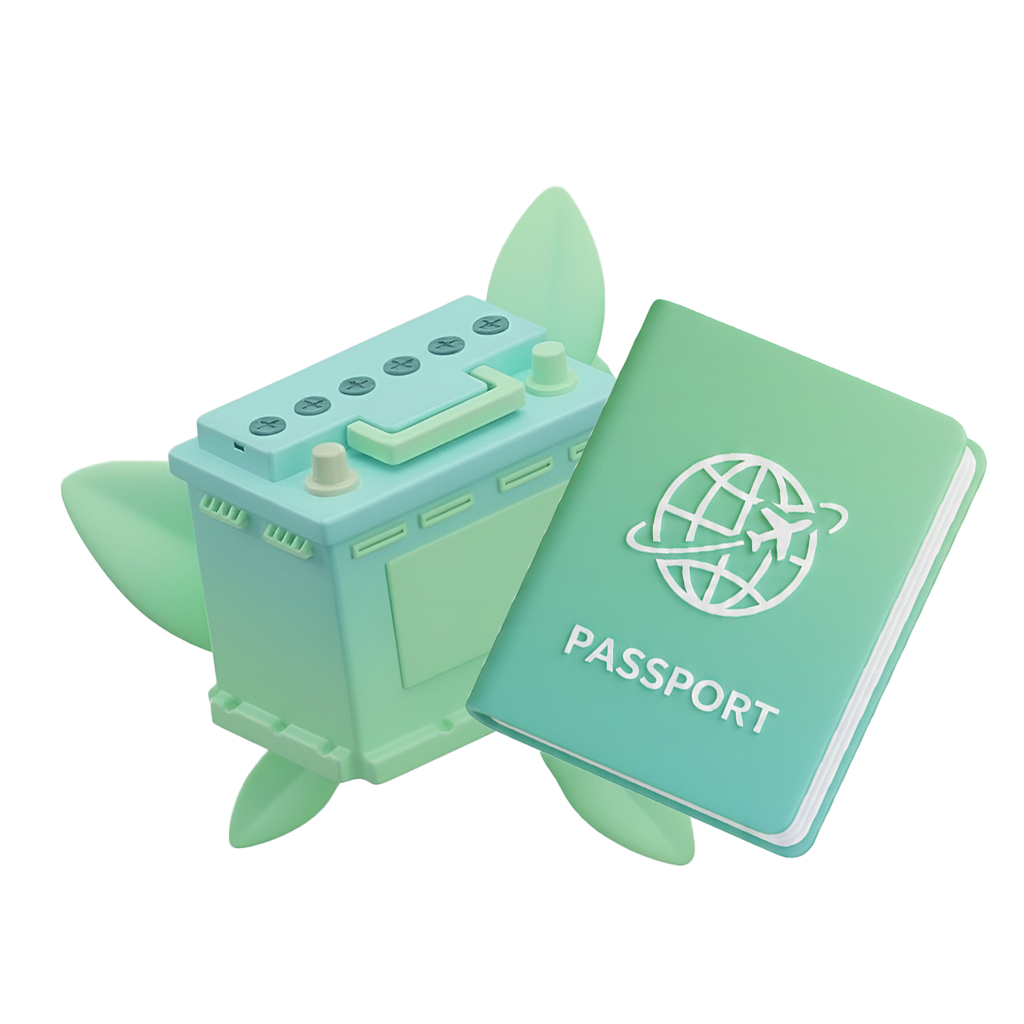

What’s Inside a Battery Digital Product Passport?
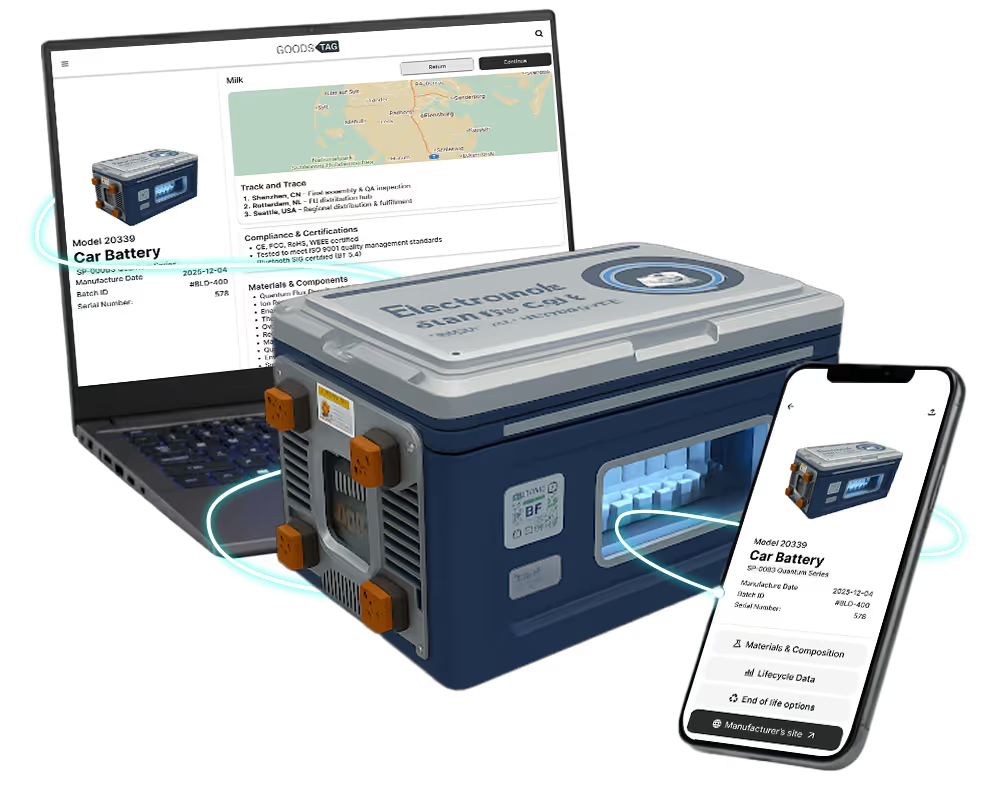
The Battery DPP is the EU’s way of giving every qualifying battery a clear, structured record of what it is and how it moves through its lifecycle. It exists to make traceability, sustainability and compliance simple, transparent and consistent across the entire value chain.
Each passport should include:
Identity
manufacturer, model, serial / batch / passport ID
Performance & composition
chemistry, capacity, critical raw materials
Sustainability
carbon footprint, recycled content, due diligence indicators
Lifecycle data
state of health, repair/reuse info, collection & recycling
Compliance & safety
conformity assessment, certificates, test reports
All this data lives in a machine-readable format: ready for regulators, recyclers, and everyone in your value chain.
Need clarity on Battery DPP requirements?
All key Battery DPP requirements in one place.
Digital Product Passport
Experts in Digital Product Passports, Ready to Guide You.
End-to-end support to simplify your DPP rollout.
What’s Getting in the Way of DPP Success?
From siloed data to unclear ownership, DPP rollout is harder than it looks.
Data spread across multiple systems
Supplier information gaps
Inconsistent formats and documentation
Lifecycle updates required over time
Unclear internal ownership
Why Leading Teams Choose GoodsTag for DPPs

Full Lifecycle Support
From data onboarding to ongoing updates, we support the full DPP lifecycle.

Built for Scale
Seamlessly handles thousands of SKUs, suppliers, and complex structures.

Compliance-Ready
Stay ahead of evolving EU regulations. Audit-ready from day one.

Proven Partner
Proven track record in high-stakes, high-volume environments.
See the live version

Experience the DPP for Yourself.
What Does a DPP Actually Look Like?

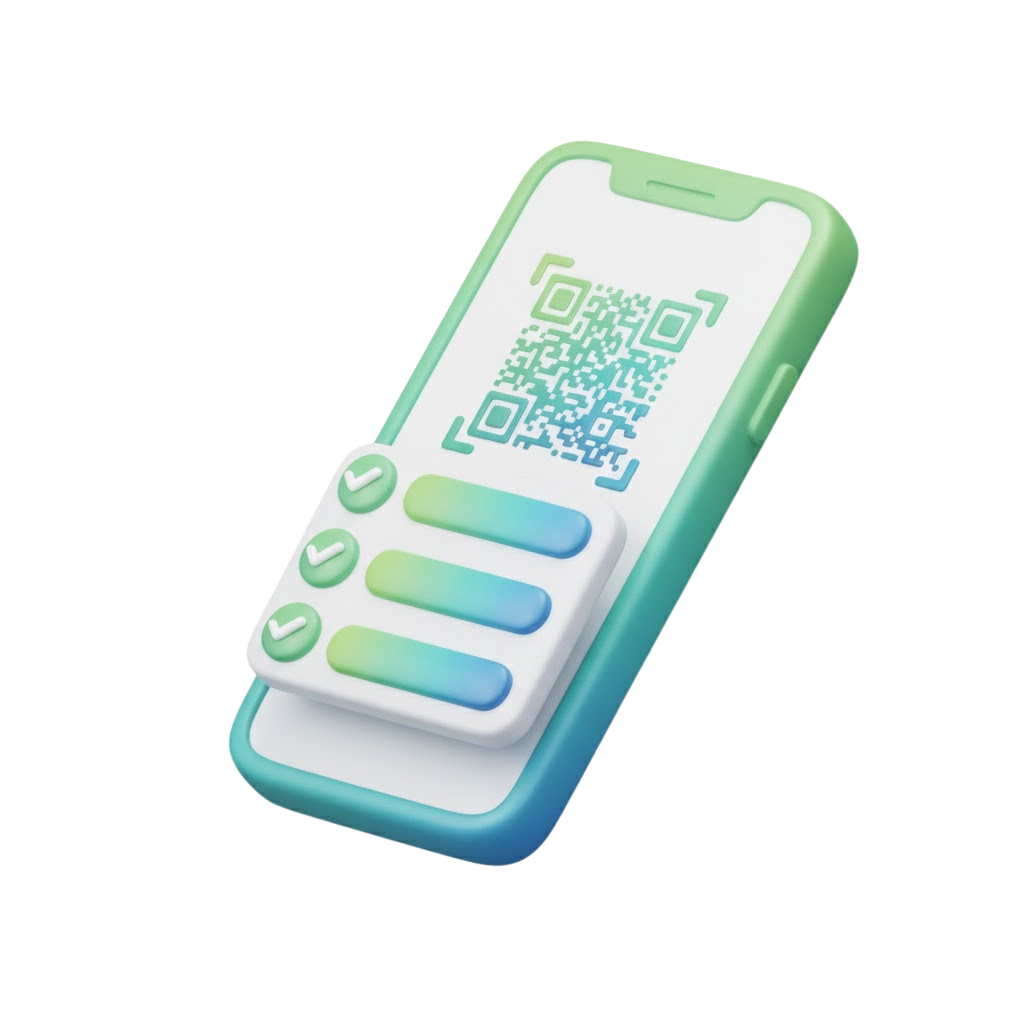
Scan to explore a real, interactive Digital Product Passport.
On the go? [Click here to open the demo]
Don’t Miss the Key Deadlines
Under the EU Battery Regulation (2023/1542), Digital Product Passports will become mandatory, starting with large battery categories in 2027.
Here are the key dates you need to know about:




When to Start Preparing?
Start early, take small steps now to avoid a compliance crisis tomorrow. Goodstag makes that first step easy.
Talk with an ExpertHow We Can Help You Approach the Battery DPP
A simple, practical way to build your internal process, without burnout.

Map the data you already have
Lay out all existing data across systems, spreadsheets, and documents to see where each field currently lives.

Identify missing information
Spot the gaps by separating usable data from incomplete, messy, or missing information.

Define internal ownership
Assign clear owners for each data area so updates and approvals have defined responsibility.
Align your structure with the EU data model
Match your internal fields to the EU DPP data model so everything aligns with required domains and formats.

Create a publishing workflow
Set a structured workflow for validating, approving, and publishing data into the DPP.

Plan for ongoing updates
Establish routines and triggers to keep the passport continuously updated as products change.
Compliance without headaches
No last-minute scrambles.
Frequently Asked Questions
1. What is a Digital Product Passport (DPP)?
A Digital Product Passport (DPP) is a structured, machine-readable data set that stores verified product information across the lifecycle. It provides traceability for materials, manufacturing processes, environmental impact, and end-of-life handling. DPPs are designed to comply with upcoming EU Ecodesign for Sustainable Products Regulation (ESPR) requirements and other emerging digital product identity initiatives.
2. What regulatory frameworks does Goodstag support?
Goodstag’s platform is built to align with any regulation framework. We natively support the EU ESPR (Digital Product Passport), PPWR (Packaging and Packaging Waste Regulation), and Circular Economy Action Plan. It supports various standards among others the GS1 standards (GTIN, EPCIS, Digital Link) and formats for lifecycle data, ensuring full compliance and interoperability across value chains.
3. How does the Goodstag platform structure and manage DPP data?
The platform uses a modular data model that maps product identifiers, materials, process data, and event-based lifecycle information. All data objects are versioned and validated through schema enforcement, enabling reliable traceability and auditability across distributed systems. The Goodstag platform is designed to handle complex hierarchies and cross-product relations, essential for nested Digital Product Passports.
4. How is data collected and synchronized across the supply chain?
Goodstag provides API endpoints, data connectors, and IoT integrations to ingest information from ERP, PLM, MES, and supplier systems. Data synchronization is event-driven and supports GS1 EPCIS 2.0 standards for real-time product event tracking.
5. How does Goodstag ensure data integrity and authenticity?
Every data record within a DPP can be cryptographically signed and timestamped. The platform supports hash-based verification for immutable provenance tracking. Access control policies ensure that only verified contributors can modify or append product data.
6. How are Digital Product Passports accessed by downstream actors?
Each product is given a unique digital identity, which can be accessed via a QR code, NFC or RFID. When scanned, this identifier resolves to a structured dataset hosted on the Goodstag platform or federated data space. Access levels can be configured for each stakeholder, such as consumers, recyclers and regulators.
7. Can Goodstag integrate with existing enterprise systems?
Yes. Goodstag’s API-first architecture supports REST interfaces, enabling seamless integration with enterprise systems such as SAP4Hana, as well as custom PLM/ERP environments. Data mapping templates facilitate rapid deployment and reduce the need for manual entry. Static and dynamic product data can be mirrored or enriched via the API throughout the entire value chain.
8. What are data mapping templates?
Data mapping templates facilitate rapid deployment and reduce the need for manual entry. Static and dynamic product data can be mirrored or enriched via the API throughout the entire value chain.
9. How scalable is the Goodstag infrastructure?
The platform is cloud-native and containerized, built on microservices architecture that supports horizontal scaling. This allows brands to manage millions of product instances and real-time data exchanges without compromising performance or compliance.
10. How does Goodstag enable circularity and lifecycle analytics?
By aggregating lifecycle data — from material sourcing to recycling — the platform enables advanced analytics on carbon footprint, material recovery rates, and supply chain efficiency. These insights can be exported via APIs or dashboards for ESG reporting and compliance submissions.
11. Does Goodstag support Digital Product Passport requirements across different industries?
Yes. The GoodsTag platform is built to support Digital Product Passport requirements across all regulated and emerging industry sectors. It provides configurable data models that map to sector-specific DPP specifications for textiles, electronics, batteries, packaging, and other categories defined under the EU Ecodesign for Sustainable Products Regulation (ESPR). With flexible schema management, GS1-compliant identifiers, event-based lifecycle data, and granular access controls, GoodsTag ensures full compatibility with both cross-industry (horizontal) regulations and detailed, sector-specific (vertical) passport requirements as they evolve.

Turning Requirements Into an Unfair Advantage
Raise value, speed decisions, and make your operations harder to copy.
Once you understand the regulation, the real opportunity appears: turn mandatory data into something that strengthens your business instead of slowing it down.
Goodstag gives you a structured way to manage Battery DPPs without rebuilding processes from zero. It helps you to scale further: not just to comply, but to operate smarter.