


Fashion DPP: Build Digital Product Passports with GoodsTag
GoodsTag provides the infrastructure to create and manage EU-compliant Fashion Digital Product Passports across your products.
What’s Inside a Fashion Digital Product Passport?
Fashion moves fast. EU regulation doesn't. The Digital Product Passport for apparel is the EU's way of making every garment traceable, transparent, and accountable: from the farm where the cotton was grown to the recycling facility where it ends up. It's a legal requirement, and it's coming for every brand in the EU market.
Each digital product passport should include:
Identity
Product ID (GTIN/UID), production date, reference size, net weight
Material Composition
Bill of materials, recycled content %, assembly lost rate, microplastic release potential
Environmental Footprint
Manufacturing energy mix, processing lost rates, 16 PEF impact categories (full lifecycle impact calculation)
Circularity, Durability & End-of-Life
Product type categorisation, durability test results (e.g.v tear strength, colour fastness), unsold goods data
Supply Chain and Traceability
Raw material mass transported, air cargo share/distances, manufacturing technologies
All structured, machine-readable, and ready for regulators, recyclers, and the next brand in the resale chain.
Need Clarity on Fashion DPP Requirements?
The regulation is evolving. We've done the reading so you don't have to.
Digital Product Passport
Fashion DPP Experts, Ready to Work With Your Team
End-to-end support to simplify your DPP rollout.
What’s Getting in the Way of DPP Success?
From siloed data to unclear ownership, DPP rollout is harder than it looks.
Data spread across multiple systems
Supplier information gaps
Inconsistent certifications, formats and documentation
Seasonal cycles change
Unclear internal ownership
Why Leading Teams Choose GoodsTag for DPPs

Full Lifecycle Support
Your DPP stays accurate through supplier changes, new seasons, and evolving regulations.

Built for Scale
Seamlessly handles thousands of SKUs, suppliers, and complex structures.

Compliance-Ready
Stay ahead of evolving EU regulations. Audit-ready from day one.

Proven Partner
Proven track record in high-stakes, high-volume environments.
See the live version

What Does a Fashion DPP Actually Look Like?
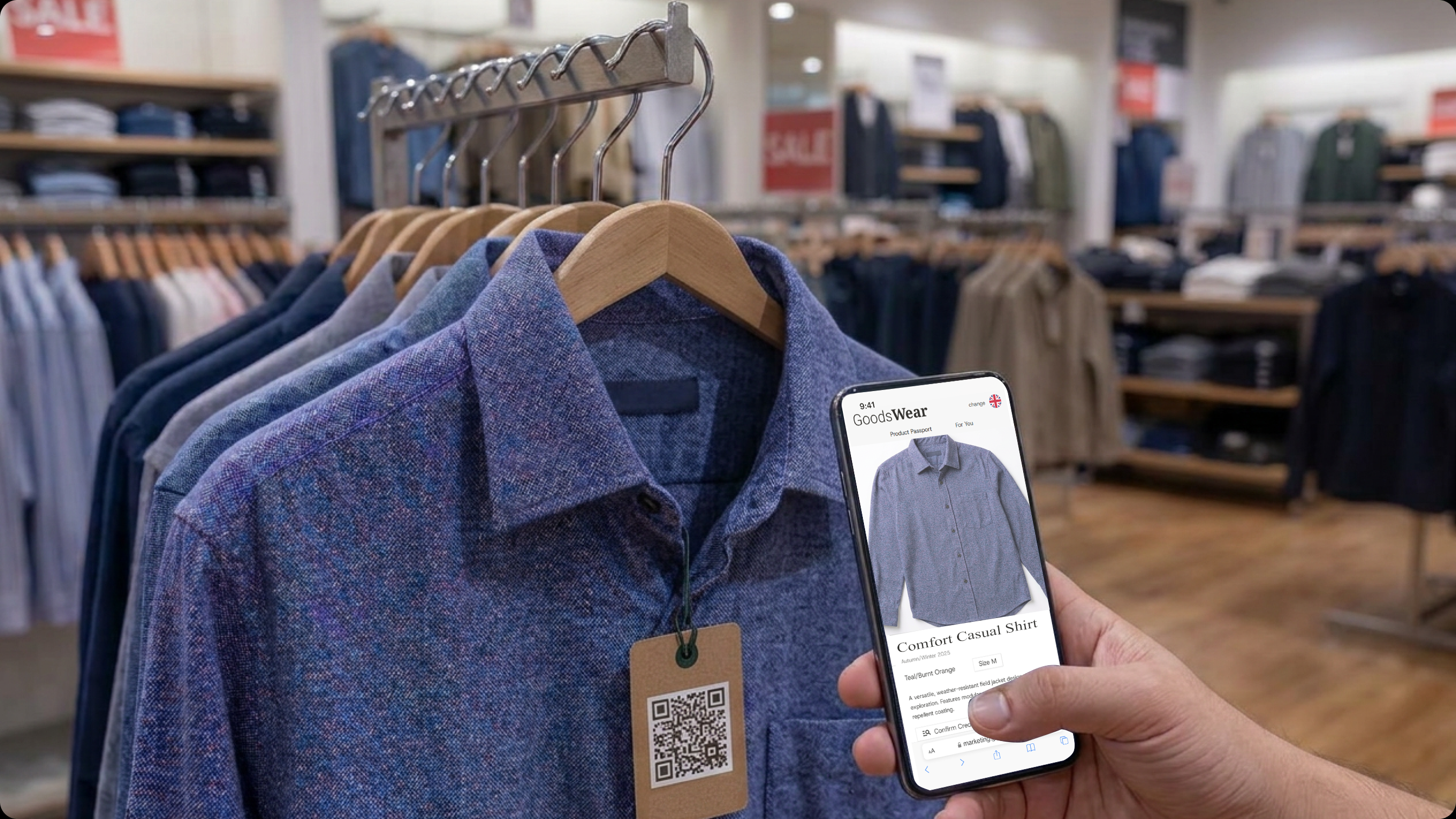
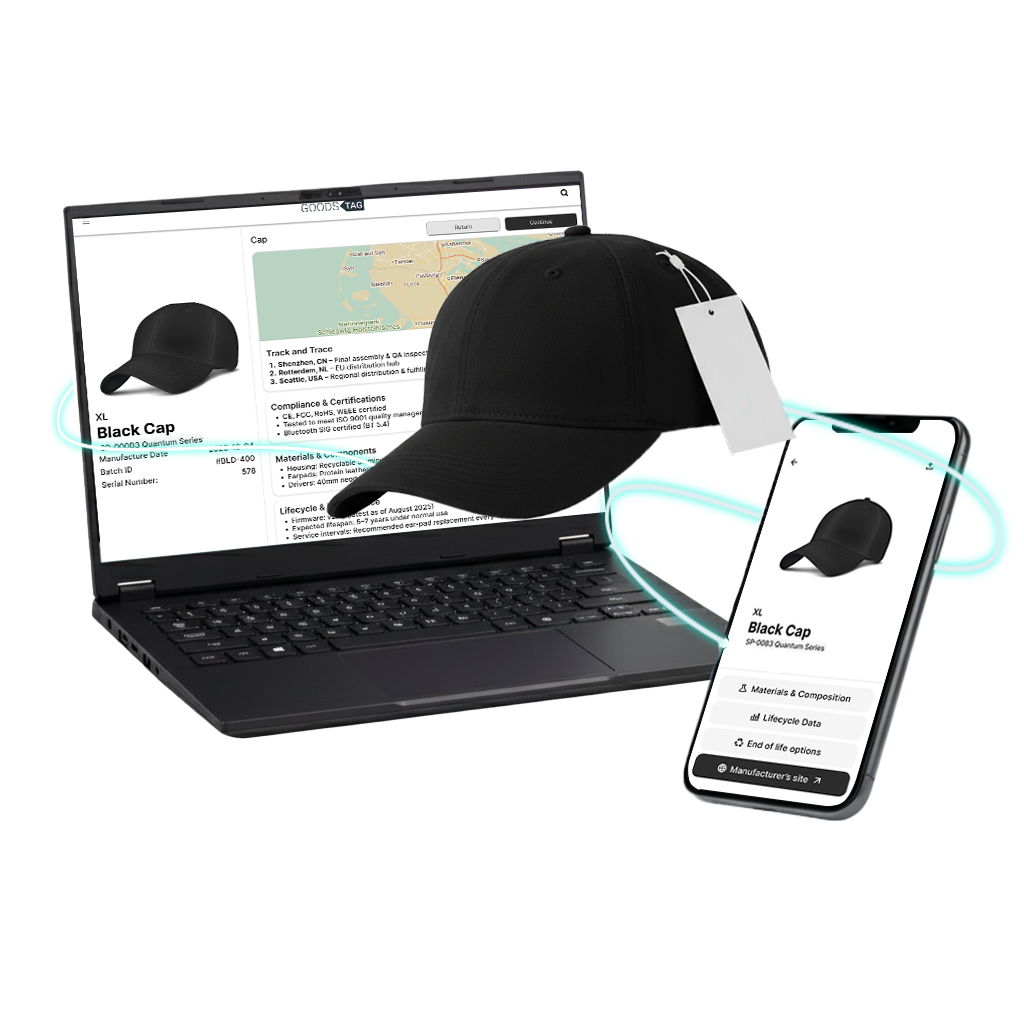
Your customers won't read a complex document. They'll scan a QR code or tap a NFC tag.

Here's what they (and regulators) see on the other side.
On the go? [Click here to open the demo]
The Deadlines Are Closer Than You Think
Under the EU's Ecodesign for Sustainable Products Regulation (ESPR), Digital Product Passports for apparel are looming over the horizon. The preparation window is shorter than most brands realise.
Here are the key dates you need to know about:






When to Start?
Our honest take: yesterday. Realistically: right now.
Every month you wait is a month less to onboard suppliers, clean data, and test your publishing workflow before regulators start checking. GoodsTag makes the first step manageable.
How We Help You Build Your Fashion DPP
A simple, practical way how we can help fashion businesses.

Map the data you already have
Lay out all existing data across systems, spreadsheets, and documents to see where each field currently lives.

Identify missing information
Spot the gaps by separating usable data from incomplete, messy, or missing information.

Define internal ownership
Assign clear owners for each data area so updates and approvals have defined responsibility.
Align your structure with the EU data model
Match your internal fields to the EU DPP data model so everything aligns with required domains and formats.

Create a publishing workflow
Set a structured workflow for validating, approving, and publishing data into the DPP.
Plan for ongoing updates
Establish routines and triggers to keep the passport continuously updated as products change.
Compliance Without Headaches
Turn the EU Fashion DPP requirements into a competitive advantage, today.
Frequently Asked Questions
1. What exactly is a Fashion Digital Product Passport (DPP)?
A Digital Product Passport is a structured, machine-readable data set that stores verified product information across a garment's entire lifecycle. It provides end-to-end traceability for materials, manufacturing processes, environmental impact, and end-of-life handling. For the fashion industry, it is designed to ensure full compliance with the upcoming EU Ecodesign for Sustainable Products Regulation (ESPR) for textiles.
2. How do we connect our physical garments to the digital passport?
GoodsTag uses serialization technology to assign a unique digital identity to each individual item or batch. This identity is connected to the physical garment via QR codes, NFC tags, DataMatrix or RFID labels. When scanned, this identifier acts as an anchor and routes the user to the garment's Product Digital Twin—a live digital replica that hosts the verified DPP dataset.
3. What kind of supply chain and lifecycle data can be tracked?
By aggregating data from various sources, the platform provides a complete view of the product's journey. You can track and manage material composition, sourcing, manufacturing processes, supplier information, and logistics. Furthermore, it captures environmental impact, carbon footprint, material recovery rates, and post-sale events like returns, repairs, reuse cycles, and recycling activities.
4. Is the GoodsTag platform fully compliant with upcoming EU regulations?
Yes, the GoodsTag platform is natively built to align with the EU ESPR and the Circular Economy Action Plan. It features configurable, modular data models that specifically map to the sector-specific DPP specifications for textiles. All compliance data can be cryptographically signed, securely shared with regulators, and structured for audit-ready reporting.
5. How do consumers interact with the Fashion DPP?
Consumers can simply scan the garment's QR code or NFC tag with their smartphone to access a mobile-first, personalized experience. The platform uses a Context Engine to ensure they see relevant information based on real-time conditions. They can view sustainability claims, material transparency, repair instructions, recycling guidelines, or targeted promotions and loyalty rewards. The platform supports role-based resolution, meaning a consumer sees an engaging brand experience while a recycler sees specific compliance data.
6. How do we feed all this data into the GoodsTag platform?
GoodsTag features an API-first architecture that seamlessly integrates with your existing enterprise systems, including ERP, PLM, MES, PIM, and supplier databases such as SAP4Hana. Data synchronization is event-driven and supports global GS1 standards like EPCIS 2.0 and GS1 Digital Link for real-time traceability.
7. Can the platform scale to handle high-volume fashion production?
Absolutely. The GoodsTag infrastructure is cloud-native and built on a microservices architecture designed to support horizontal scaling. It is built for high-volume serialization and global scanning volumes, allowing brands to manage millions - or even billions - of product instances globally without compromising speed. It also adapts automatically to multi-country language and market requirements.
8. How does implementing a Fashion DPP drive commercial value and ROI?
The platform turns the DPP into a powerful commercial asset by building high-quality, privacy-compliant zero- and first-party consumer data directly from product interactions, without third-party cookies. It unlocks post-sale engagement like targeted promotions and loyalty rewards. Additionally, the platform provides advanced analytics on consumer engagement, supply chain efficiency, and circularity metrics to optimize operational ROI.
9. How do we start implementing the DPP, and do we need item-level serialization immediately?
You don't need to do everything at once. GoodsTag features a modular design that empowers brands to start at any point. You can begin digital twin implementation at the product or batch level and progressively expand to full item-level serialization as operational readiness grows. Using API-first architecture and data mapping templates, the platform facilitates rapid deployment with existing PLM or ERP systems.
10. What types of physical labels or data carriers can be used?
The platform is identity- and label-agnostic. You can seamlessly connect physical garments using QR codes, NFC tags, RFID labels (including UHF, HF, and DualFrequency tags), or DataMatrix codes. It natively supports the GS1 Digital Link standard. You can introduce one ID medium first (like a printed QR code) and easily add further technologies like RFID or NFC later without recreating the digital twin.
11. Can we use our own custom domains and branding for the DPP experience?
Yes. The platform supports full white-label management and redirect domains, enabling branded QR code URLs. If you use automatically generated mobile landing pages, you can fully customize the branding for each product through the branding service (brand name, logo, T&Cs, contact details, social links). This ensures users are immersed in your brand's look and feel while accessing compliant data.

The Brands That Move First Will Set the Standard
Build your brand on top of compliance.
The DPP makes product transparency mandatory. Use that transparency to tell your story. The brands that get there first will use it to do something more: tell a better story, earn more trust, and turn supply chain data into a competitive edge.