
Digital Product Passport Platform
Compliance without headaches
One source of truth for every product, every market. Simplify compliance with a system built to evolve.
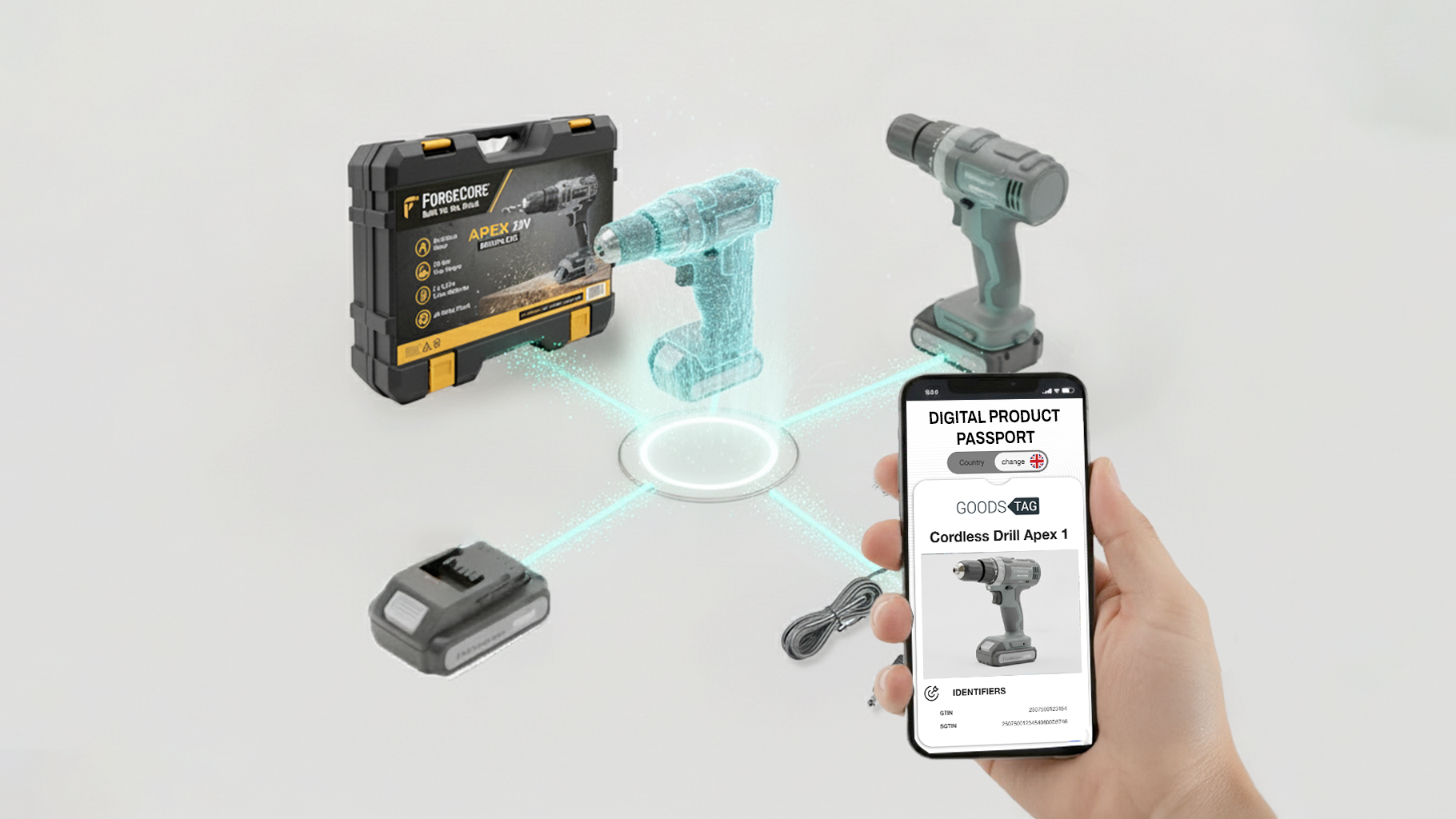
Are you ready for the next product transparency laws?
Your data is scattered across ERP, PLM, and supplier spreadsheets. Regulators won’t wait while you reconcile it. One missed disclosure could mean fines, lost shelf space, and shaken consumer trust.

Try Out The Demo

Automatic compliance reporting for every SKU, batch, or item
ESPR, PPWR, and DPP foundation for global regulations (EU, US, China, more)
Audit-ready data without extra effort
Labels and redirects updated globally in real time
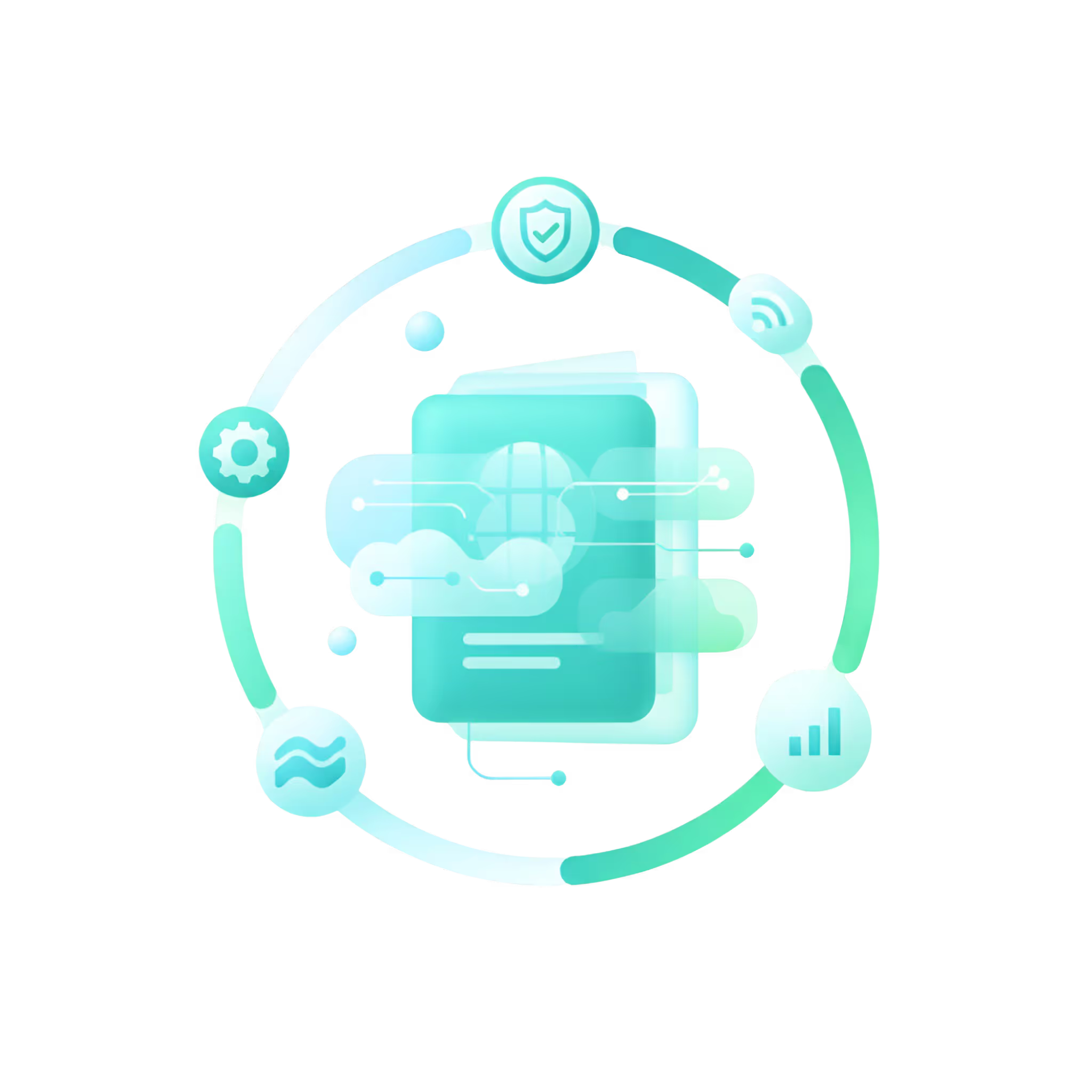
All product and packaging data in one place
Machines, RFID scanners, and sensors feeding data automatically
Suppliers connected directly through forms and apps
Errors, duplicates, and version chaos eliminated

Regulations contextualized per country at the moment of scan
AI-powered translation with built-in validation workflows
Anticipate new KPIs, attributes, and regulatory changes with ease
Global launches, instant updates, no re-labeling headaches
How The Digital Product Passport Works
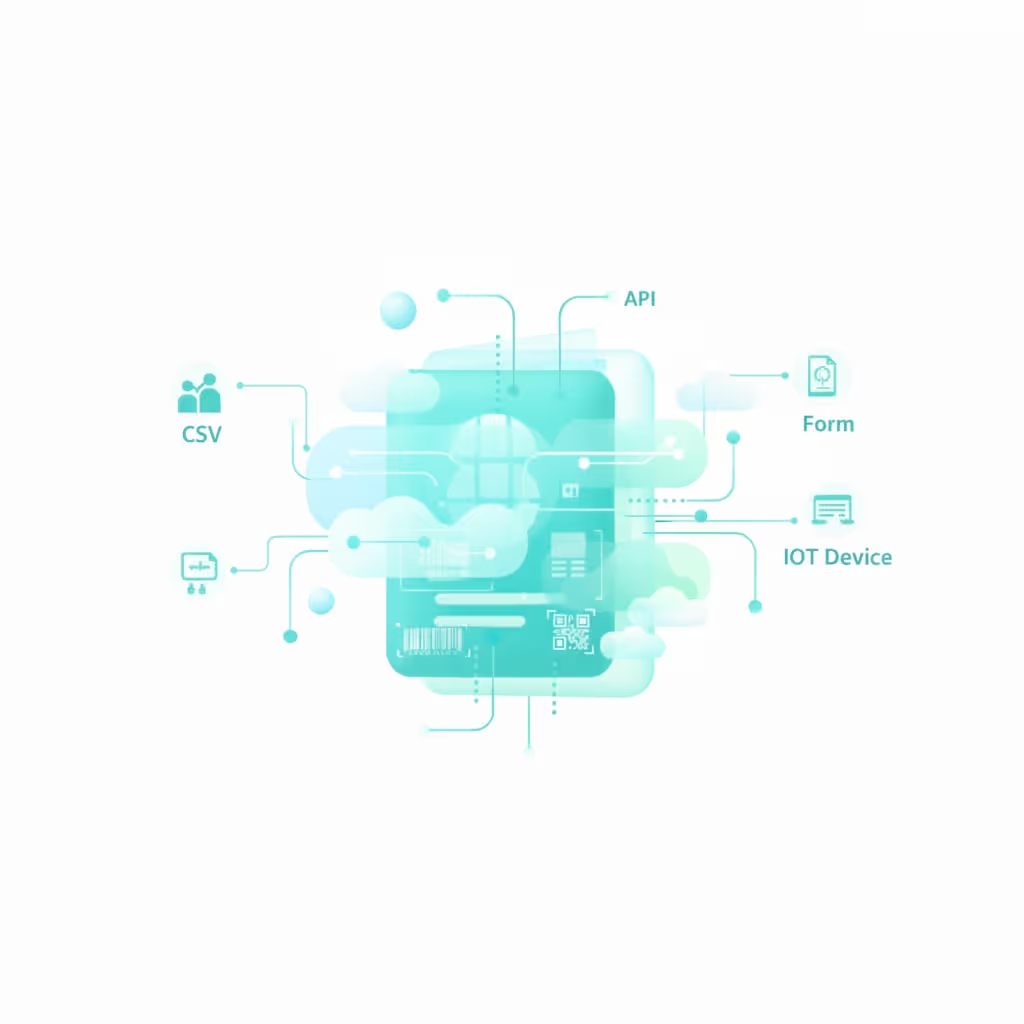
Collect product & packaging data
- Every product variation gets a unique identity.
- Each product gets its own passport.
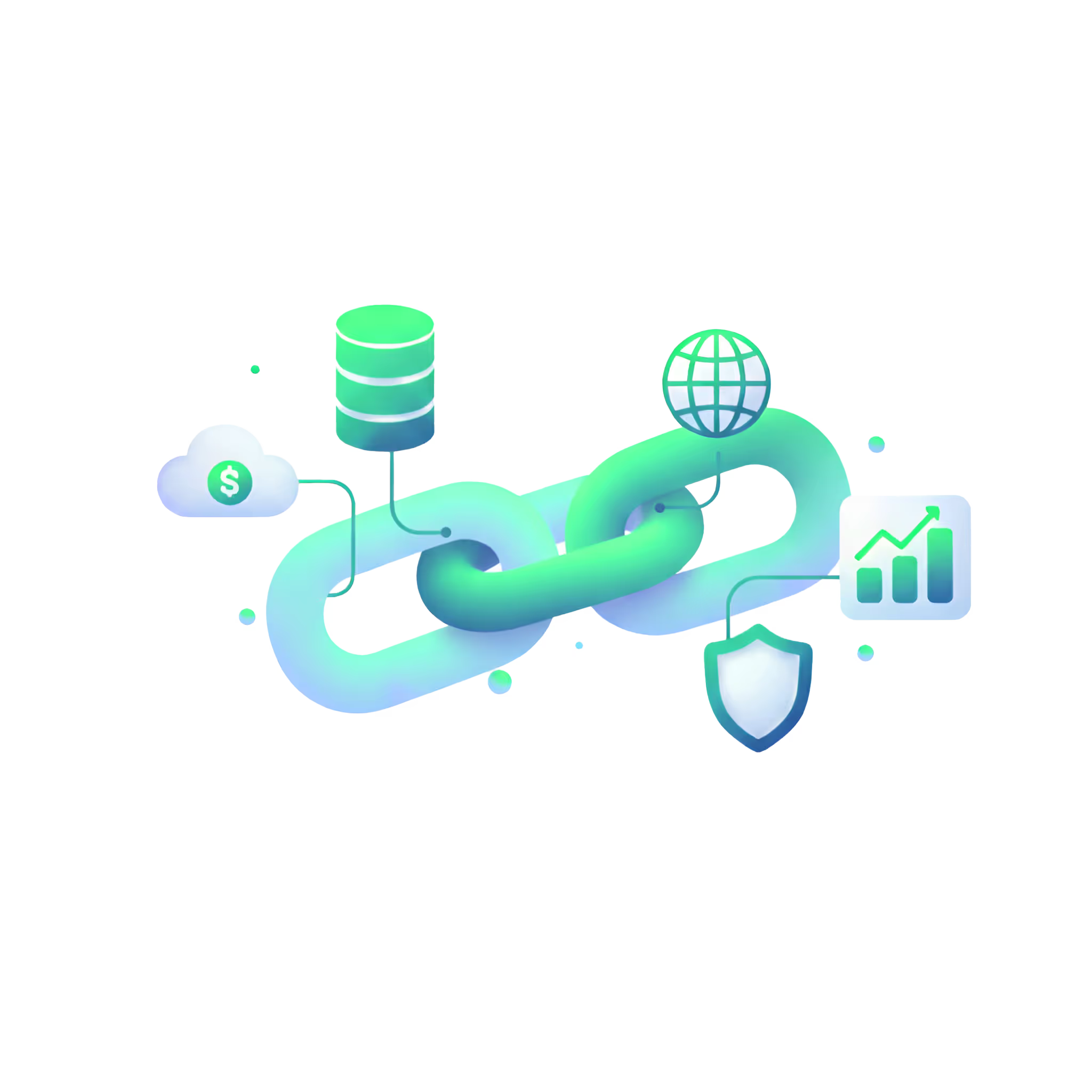
Centralize your data
- Seamless integration via API, flat files, web, or mobile apps.
- Enrich data through any label (RFID, NFC, or QR) during the lifecycle.

Publish instantly and everywhere
- Generate compliance reports and consumer-oriented digital product passports automatically.
- Publish through API, data export and QR code.
How it works
From hardware tools to food to packaging systems, GoodsTag helps brands move faster, prove compliance, and earn trust.

Every product variation gets a unique identity.
Every product variation gets a unique identity.
Every product variation gets a unique identity.
Every product variation gets a unique identity.
Every product variation gets a unique identity.
Every product variation gets a unique identity.
The Tech Behind Our Digital Product Passport

Product Identity Management
Issue a unique, standards-ready ID per item (QR/NFC/RFID). GS1 keys (GTIN/lot/serial) or your own. Built to verify.
Digital Twin Foundation
Spin up a live digital twin for every product with lifecycle states, ingredients/materials, and provenance you can trust.
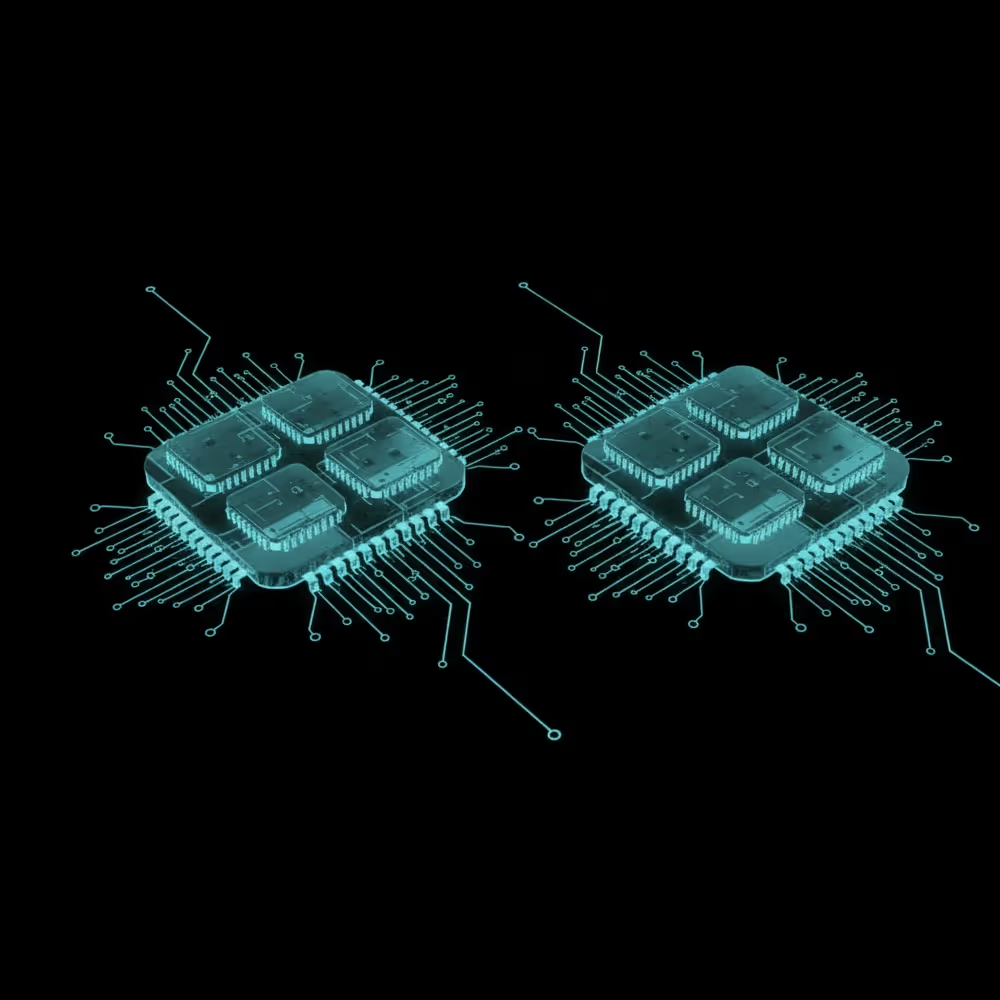

Data Aggregation & Consolidation
Know if reuse is working.
See recycling, returns, and savings in real numbers, not guesses.
Product Experiences / Data Publisher
Publish compliant product pages and proofs (ESPR, PPWR) in a click. No app—scan and see verified facts.

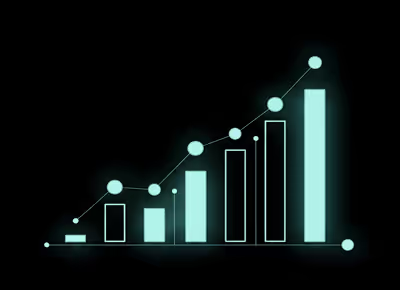
Product Data Analytics & Insights
Track scan behavior, claims usage, and lifecycle KPIs. Spot gaps, prove compliance, and improve the next release.

“Nam gravida congue posuere pretium dignissim nulla elit aeneanol quis malesua aliquet feugiat orcilm nunc sed semper duis turpis id”
Frequently Asked Questions
1. What is a Digital Product Passport (DPP)?
A Digital Product Passport (DPP) is a structured, machine-readable data set that stores verified product information across the lifecycle. It provides traceability for materials, manufacturing processes, environmental impact, and end-of-life handling. DPPs are designed to comply with upcoming EU Ecodesign for Sustainable Products Regulation (ESPR) requirements and other emerging digital product identity standards.
2. What regulatory frameworks does Goodstag support?
Goodstag’s platform is built to align with the EU ESPR, Circular Economy Action Plan, and Digital Product Passport Initiative. It integrates with GS1 standards (GTIN, EPCIS, Digital Link) and supports various standards and formats for lifecycle data, ensuring full compliance and interoperability across value chains.
3. How does the Goodstag platform structure and manage DPP data?
The platform uses a modular data model that maps product identifiers, materials, process data, and event-based lifecycle information. All data objects are versioned and validated through schema enforcement, enabling reliable traceability and auditability across distributed systems. The Goodstag platform is designed to handle complex hierarchies and cross-product relations, essential for nested Digital Product Passports.
4. How is data collected and synchronized across the supply chain?
Goodstag provides API endpoints, data connectors, and IoT integrations to ingest information from ERP, PLM, MES, and supplier systems. Data synchronization is event-driven and supports GS1 EPCIS 2.0 standards for real-time product event tracking.
5. How does Goodstag ensure data integrity and authenticity?
Every data record within a DPP can be cryptographically signed and timestamped. The platform supports hash-based verification for immutable provenance tracking. Access control policies ensure that only verified contributors can modify or append product data.
6. How are Digital Product Passports accessed by downstream actors?
Each product is given a unique digital identity, which can be accessed via a QR code, NFC or RFID. When scanned, this identifier resolves to a structured dataset hosted on the Goodstag platform or federated data space. Access levels can be configured for each stakeholder, such as consumers, recyclers and regulators.
7. Can Goodstag integrate with existing enterprise systems?
Yes. Goodstag’s API-first architecture supports REST interfaces, enabling seamless integration with enterprise systems such as SAP4Hana, as well as custom PLM/ERP environments. Data mapping templates facilitate rapid deployment and reduce the need for manual entry. Static and dynamic product data can be mirrored or enriched via the API throughout the entire value chain.
8. What are data mapping templates?
Data mapping templates facilitate rapid deployment and reduce the need for manual entry. Static and dynamic product data can be mirrored or enriched via the API throughout the entire value chain.
9. How scalable is the Goodstag infrastructure?
The platform is cloud-native and containerized, built on microservices architecture that supports horizontal scaling. This allows brands to manage millions of product instances and real-time data exchanges without compromising performance or compliance.
10. How does Goodstag enable circularity and lifecycle analytics?
By aggregating lifecycle data — from material sourcing to recycling — the platform enables advanced analytics on carbon footprint, material recovery rates, and supply chain efficiency. These insights can be exported via APIs or dashboards for ESG reporting and compliance submissions.